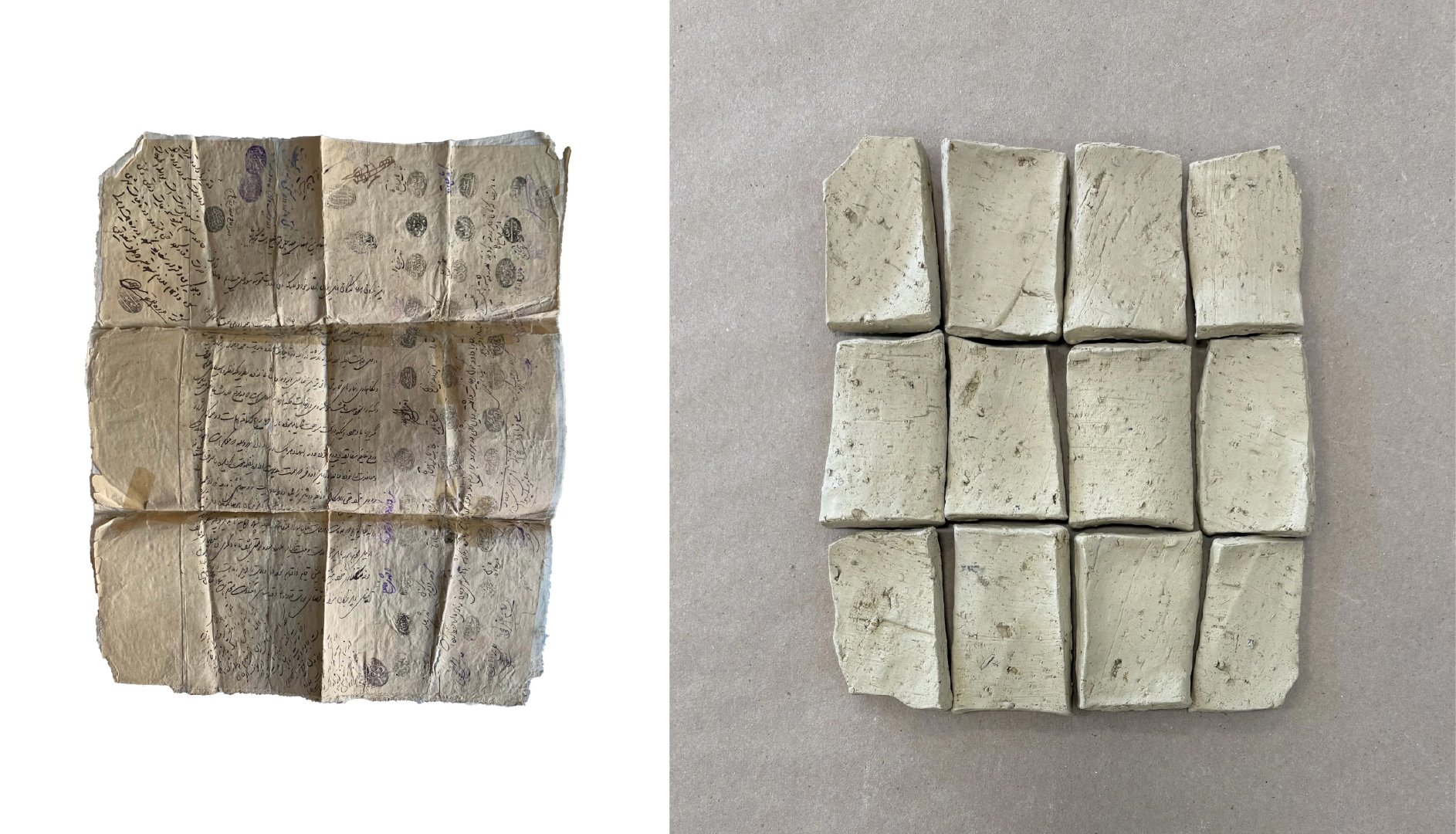
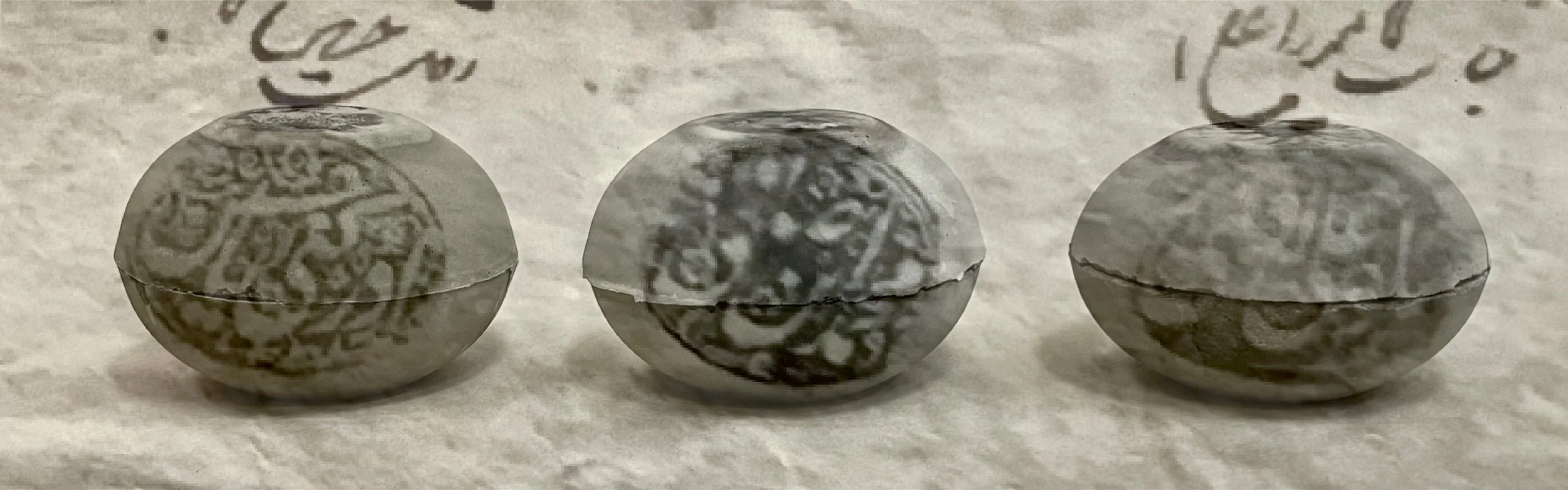
Central to the DIASPORA PROJECT are administrative documents conveyed by my grandfather following his forced deportation from his home region surrounding Lake Urmia in what is now northwestern Iran (then, Persia) during the Assyrian Genocide (1915-1924). I approach the documents not only as texts to be translated and read, but as objects and images to be encountered materially. Inscribed in Ottoman Turkish, Aramaic, and Russian, they are illegible to me. To me, then, they appear not as language, but as matter. This metaphysical shift from document to object reframes interpretation itself. The documents cease functioning primarily as carriers of administrative meaning and instead emerge as tectonic surfaces: folded, stamped, creased, weathered, compressed. The topography of folds, the spatial logic of creases, the transient and obsessive choreographies of ink, and the placement and implied percussiveness of administrative seals and stamps carry forms of pressure and memory not fully reducible to translation. Resulting are FORMAL IMAGINARIES — Chorus and Folded Landscape (see below).
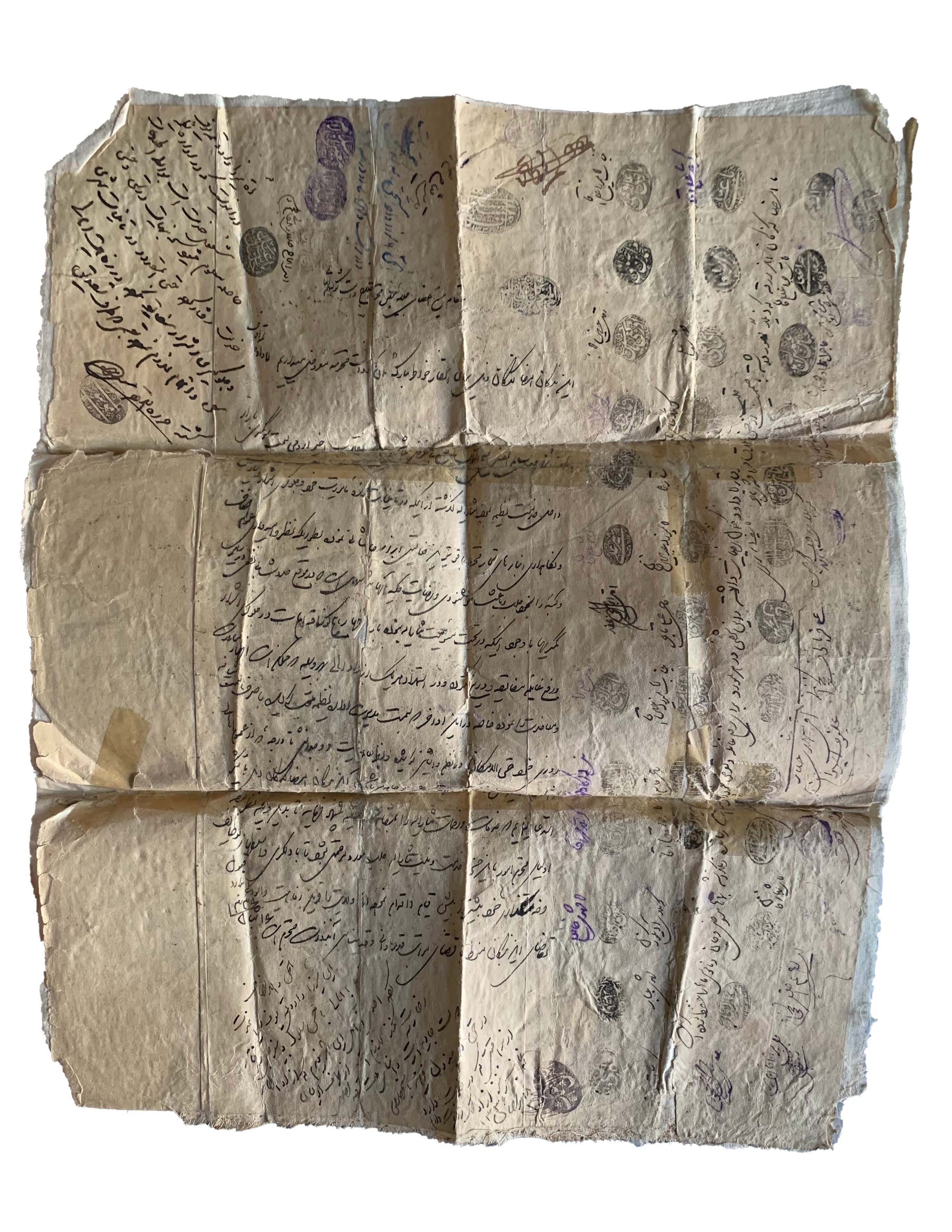
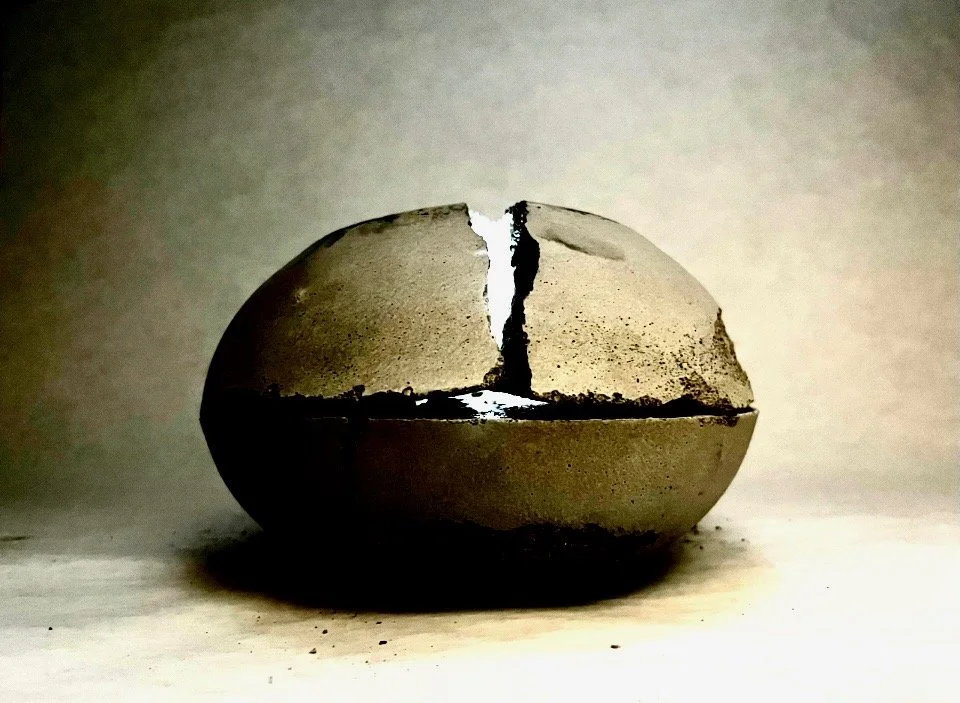
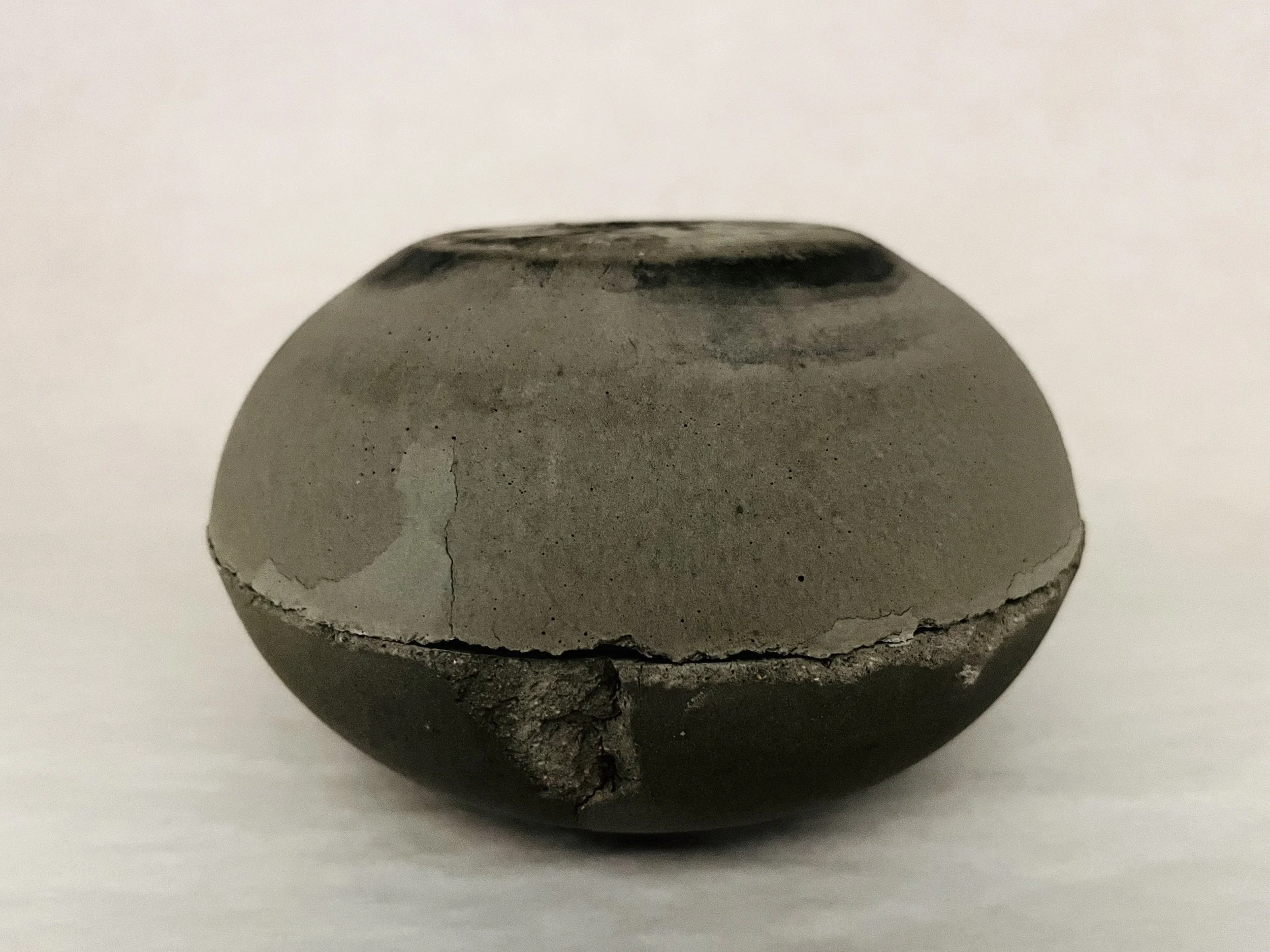
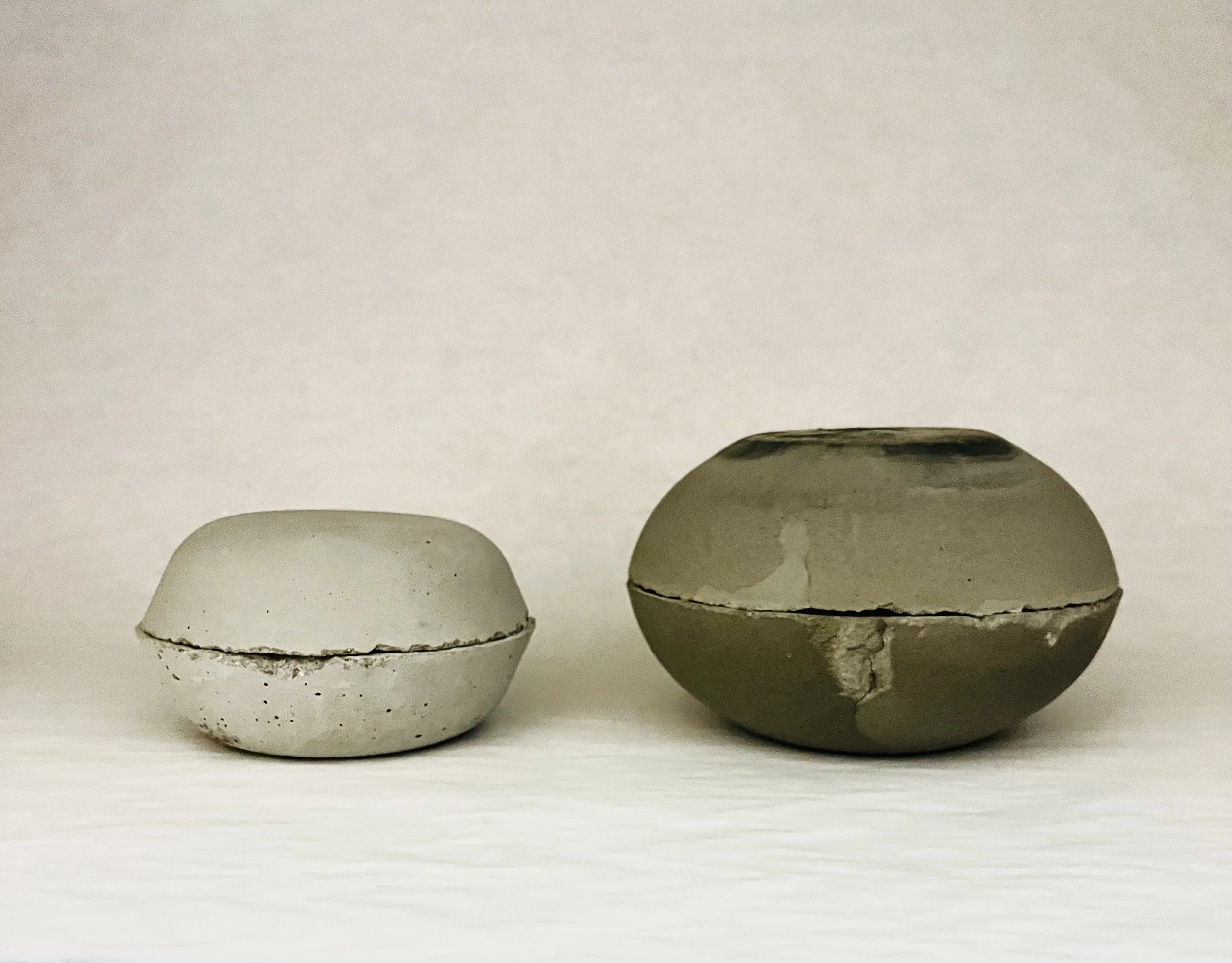
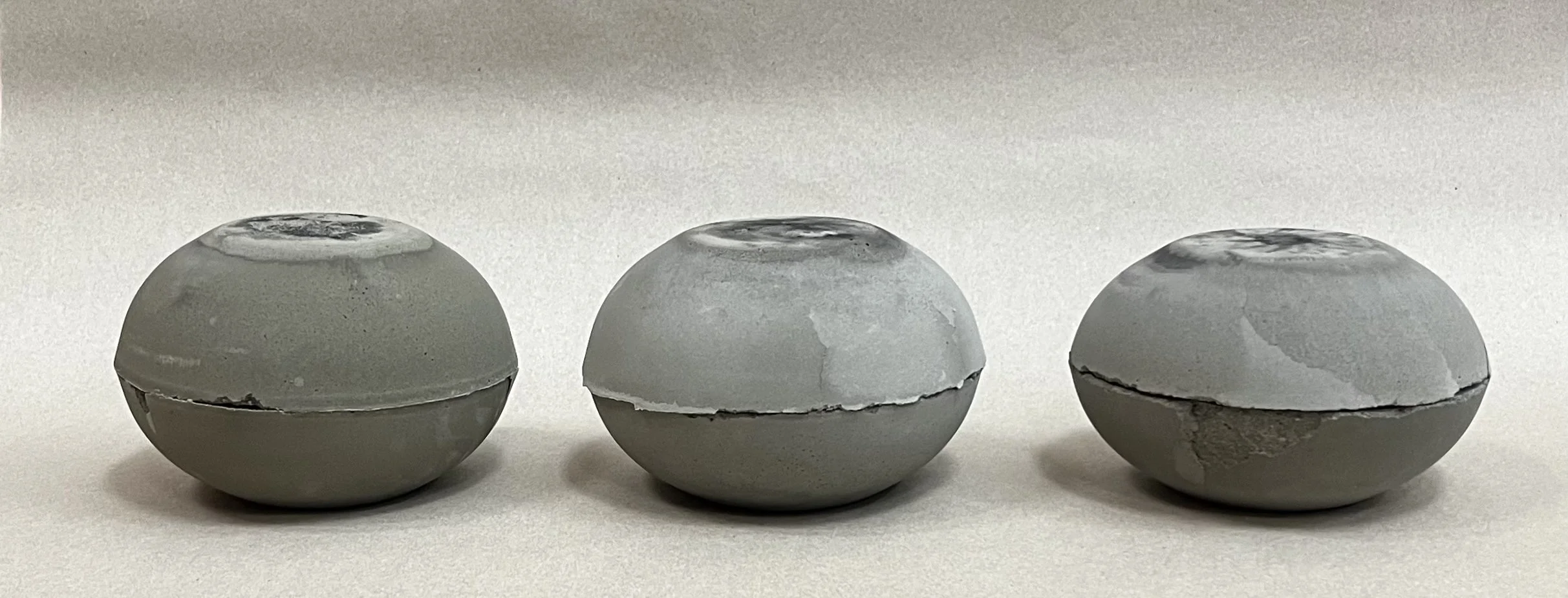
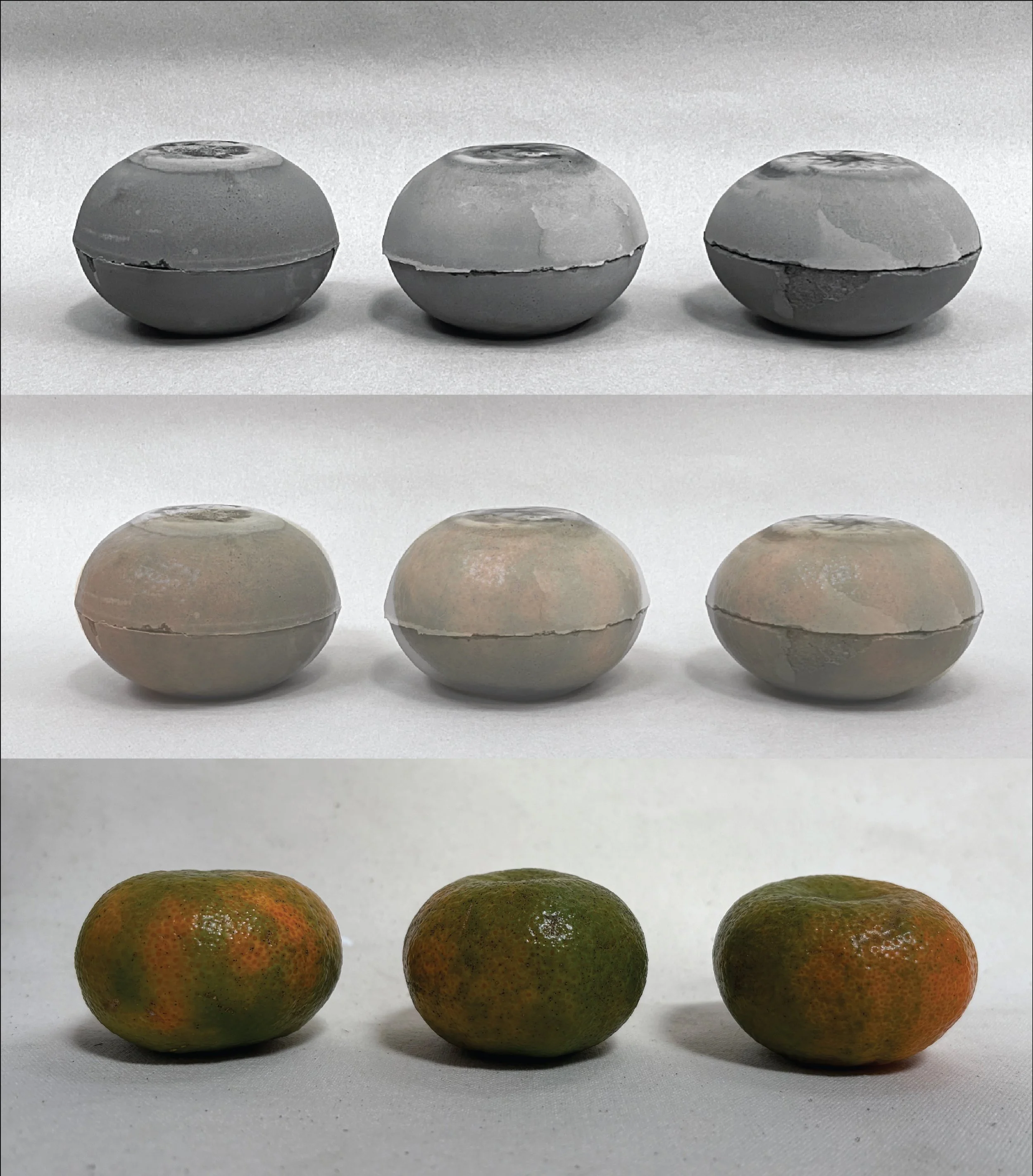
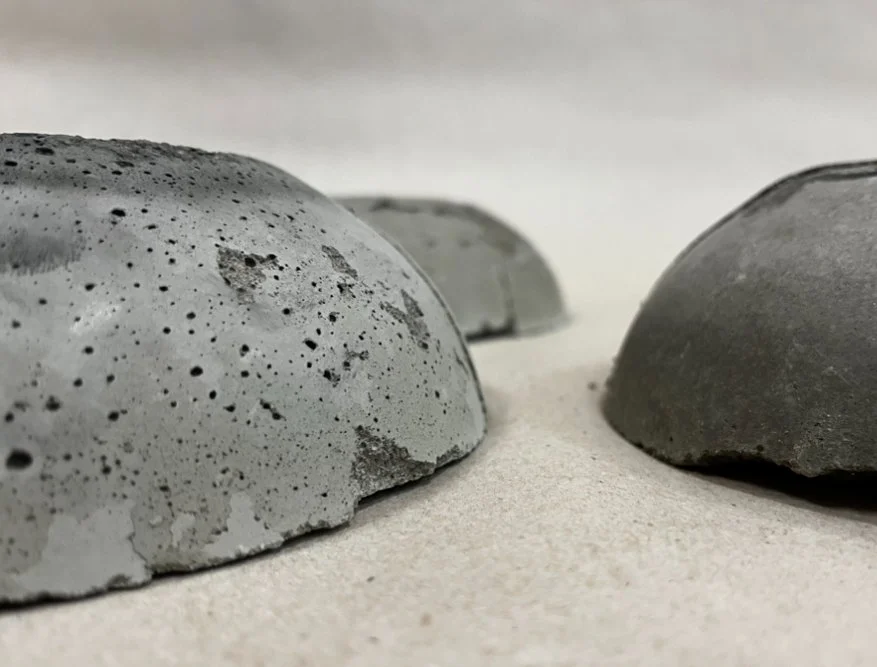
Below is Chorus, a work in progress from the FORMAL IMAGINARIES series. Chorus transmutes documents such as the one above into sound and sculptural forms. Shown below are samples of ovoid, concrete vessels (8” diameter x 5” high) – sculptural transmutations of the ovoid shapes of the documents’ two-dimensional seals. The vessels are composed of an unlikely alliance of materials with distinct and opposed natures: one, heavy and stable (concrete); another, light and fugitive (watercolor); yet another, immaterial and sonorous (sound). Chorus is a sensory installation of the vessels emitting low frequency readings of "oracular" translations of the documents. Perceived is a precious presence. Experienced is an empathy of witness. Rather than relying on static archival displays of documents, Chorus unfolds through an immersive, multidisciplinary, multi-sensory work designed to foster active civic participation.
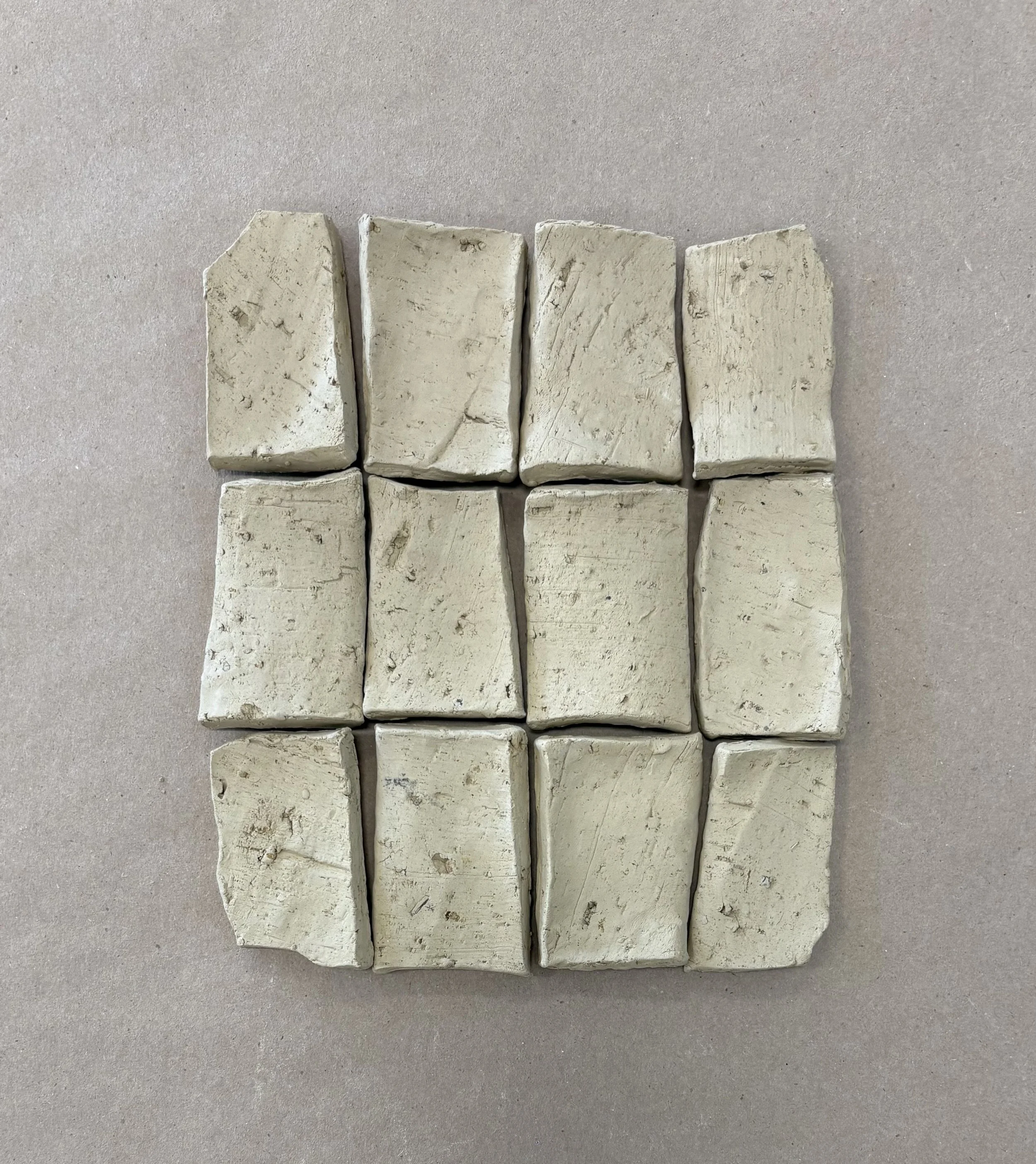
Shown below is a maquette (12” L x 10” W x 1/2” H, wild clay sourced in San Bernardo, Cundinamarca, Colombia, South America) of Folded Landscape, a work in progress from the FORMAL IMAGINARIES series. Folded Landscape is intended to be an installation of twelve large-format concrete panels corresponding to the twelve folded sections of the document shown above. Scaled for public assembly, the work transforms the folds into an interactive sculptural condition by means of which viewers traverse a topography of instability, disorientation, and displacement. Conceived as a “diasporic floor,” the work creates a physical threshold linking material memory with contemporary spatial realities. At their present scale, the components of the maquette are reminiscent of Mesopotamian clay tablets, as those found at the Royal Library of Ashurbanipal (established 7th century BCE) from which 30,000 tablets and fragments were collected and now archived at the British Museum in London.